
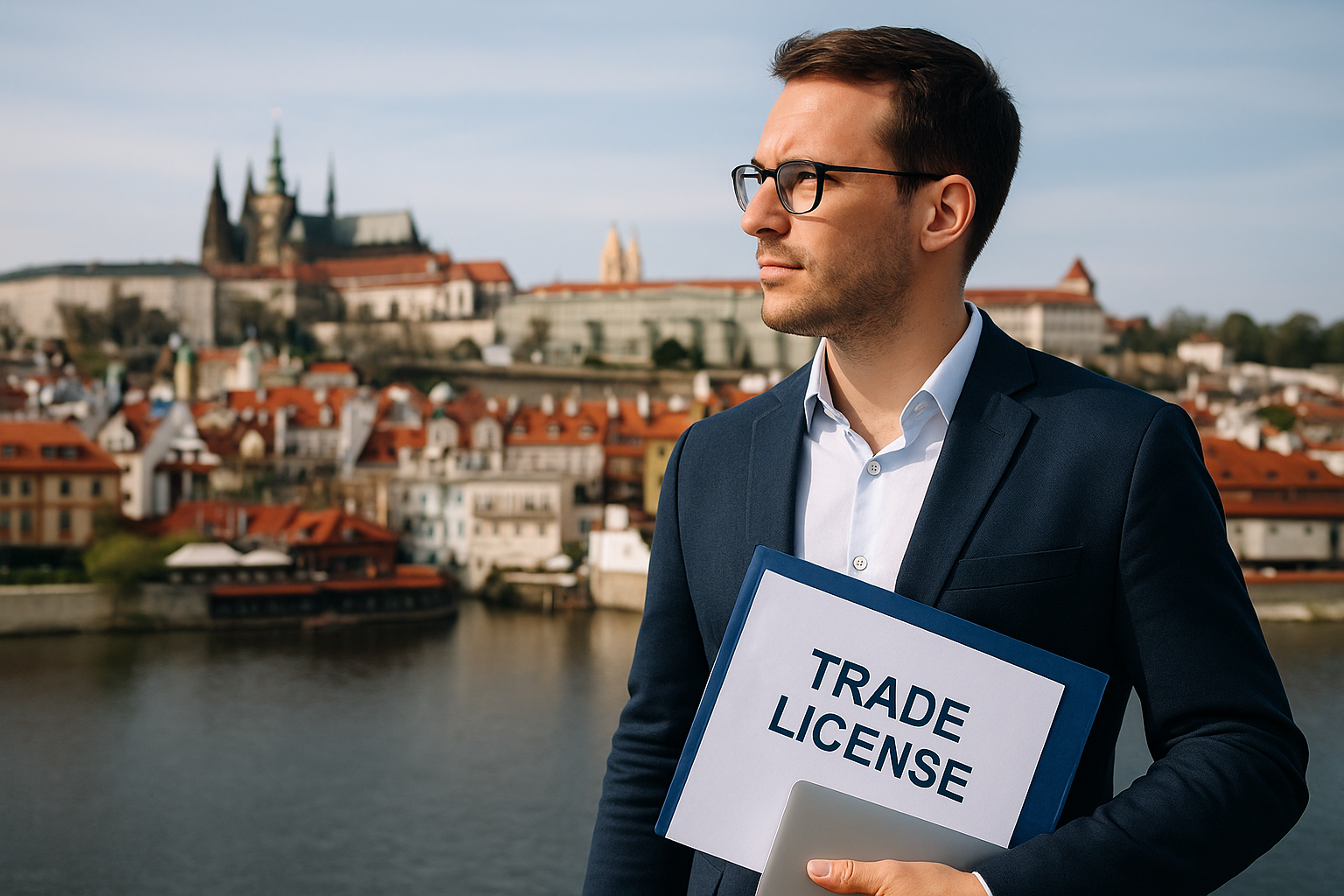
Starting a business in a new country can feel complicated. In the Czech Republic, the most common way for expats to become self-employed is through a živnost – a trade license. It allows you to work as a freelancer, consultant, or small business owner without setting up a company.
What is a Trade License (Živnost)?
A trade license is the official permit that allows you to run a business activity in the Czech Republic. It is required for almost all types of services and freelance work.
There are two main categories:
- Notifiable trades (ohlašovací živnosti) – the most common option.
- Concession trades (koncesované živnosti) – reserved for more sensitive business areas.
Notifiable Trades
1. Free trades (volné živnosti)
- No professional qualification is required.
- Popular among freelancers, consultants, translators, IT specialists, designers, marketing experts, or people selling goods and services.
- For many expats, this is the easiest way to start working independently.
2. Craft trades (řemeslné živnosti)
- Based on a specific skill or craft.
- You usually need to prove vocational training, experience, or a certificate.
- Examples: carpentry, plumbing, hairdressing, bakery, car mechanics.
- If your qualification was obtained abroad, it often has to be recognized in the Czech Republic.
3. Regulated trades (vázané živnosti)
- For activities where the state requires special authorization or knowledge.
- Examples: accounting services, driving schools, real estate agents, or running a travel agency.
- These trades often involve submitting additional documents or approvals.
👉 You can find the official list of all types of trades on the Czech Trade Licensing Register (RŽP)
Concession Trades
- Concessions apply to activities with higher legal or safety risks. They require explicit approval from authorities before you can start.
- Here the state may require you to prove that you have specific facilities, equipment, or agreements in place (e.g. a cooling facility for funeral services, vehicles that meet safety standards for passenger transport, or certified storage for hazardous materials).
- Examples include: passenger transport, private security services, production of alcohol or weapons.
- The process is more demanding and can take longer.
Conditions for Expats
Foreigners can apply for a trade license, but the requirements depend on their nationality and residence status:
- EU citizens can usually register under the same conditions as Czech nationals.
- Non-EU citizens must have a visa or residence permit that allows self-employment.
In addition to this, all applicants need to prove a clean criminal record and a legal address in the Czech Republic.
Why It Can Be Challenging
The system is not always straightforward:
- Forms and documents are in Czech.
- Some professions require recognition of foreign qualifications.
- Different types of trades mean different rules.
- Offices may require official translations or additional confirmations.
For many expats, this process can be time-consuming and confusing – especially if they don’t speak Czech or don’t know exactly which type of license they need.
Expat-Friendly Solution
Instead of navigating Czech bureaucracy on your own, you can rely on a local partner. At ExpatHub, we help foreigners:
- Choose the right type of trade license for their activity.
- Handle all communication with authorities.
- Prepare and submit the required documents.
- Make sure their residence status matches their business plans.
This way, you can focus on growing your business while we take care of the paperwork.
Conclusion
A Czech trade license (živnost) is a great way for expats to work independently, but the rules can be complex. Whether you’re planning to freelance, open a small business, or compare options with setting up a company, the safest approach is to get professional guidance.
👉 Thinking about starting a business in Czechia? Contact ExpatHub and let us handle the process for you.
Leave a Reply